Vision correction
20 years of vision correction in Hong Kong,by your side, so you keep seeing clearly.
Five procedures for myopia and astigmatism — SMILE Pro, SMILE, SILK, LASIK and ICL — and presbyopia correction. Which one suits you depends on your prescription, corneal thickness and shape, the space inside the eye, your age and your daily life, and is recommended by a doctor after the pre-operative examination.
- No.1 in Hong Kong by market share for both SMILE and ICL at listing*
- No.1 in Hong Kong for ICL three years running
- SILK, only at Clarity in Hong Kong
- 10 specialist ophthalmologists
- A dedicated account manager throughout
*As disclosed in the 2022 listing document, each share was more than twice the second provider's; the maker does not disclose more recent SMILE figures.
Procedures and fees
Six options
The fees below are for both eyes and are starting prices; what each fee includes — the pre-operative examination and the follow-ups — is in the fees section of each procedure page.
- Laser · no flap
SMILE Pro Laser Vision Correction
From HK$21,750People with myopia and astigmatism and adequate corneal thickness who would rather not have a corneal flap, or who tend to feel nervous. - Laser · no flap
SMILE Laser Vision Correction
From HK$16,800Similar patients to SMILE Pro, who value a long clinical record over the newest technology. - Laser · no flap
SILK Laser Vision Correction
From HK$26,800People with myopia and astigmatism and suitable corneal conditions who want the newest technology. - Laser · with a flap
LASIK Laser Vision Correction
From HK$19,800People with suitable corneal conditions who have discussed the long-term considerations of a corneal flap with their doctor. - Cornea untouched
ICL Implantable Collamer Lens
From HK$49,800People with a high prescription or thin corneas, enough space inside the eye, who want to keep the eye's own structure - Ageing of the lens
Presbyopia Correction
Quoted by optionPeople in middle age who find close work harder and want to rely less on reading glasses
Which suits me
Start from your situation
Start from what you already know: your daily habits, your age, your budget and what matters most to you. Corneal thickness and the space inside the eye are measured at the pre-operative examination, and the doctor explains them together with the results; whether any option suits you still depends on that examination.
Contact sport or knocks
Regular contact sports, or work where the eyes are easily struck
A corneal flap may shift following a significant eye injury, so people with a higher risk of eye trauma often discuss flap-free procedures with their doctor. ICL is also a flap-free option and can be considered alongside these procedures.
Near vision blurring
Near vision becoming blurred in middle age, or already using reading glasses
Laser vision correction for myopia cannot prevent presbyopia from developing with age. If close work is already becoming more difficult, presbyopia treatment options should be assessed at the same time rather than treating myopia alone.
Hyperopia
Hyperopia (long-sightedness)
On the current comparison data, ICL and LASIK can correct hyperopia, while SMILE Pro, SMILE and SILK cannot; lens exchange (presbyopia treatment) can correct hyperopia at the same time. The treatable prescription is assessed by the doctor at the pre-operative examination.
Keeping the option to undo
Wanting to keep the option of undoing it
Laser vision correction changes the curvature of the cornea permanently. The ICL lens does not bond to the tissue inside the eye, so a doctor can remove or exchange it later if needed, although removal is itself an operation inside the eye.
Back to work and sport
Wanting to know when you can return to work and sport after surgery
The first days after surgery differ by procedure. The small-incision lenticule procedures, LASIK and ICL each have their own recovery pace and follow-up schedule. Every procedure page has a recovery timeline listing what you can do and should avoid at each stage; tell us your job and your schedule when you book, and the doctor will suggest a surgery date accordingly.
Budget first
Wanting to know the budget first, and what the fee includes
The surgery fee differs by procedure, and so do the follow-ups, examinations and cover it includes. The Vision Correction Fees page sets the fees and inclusions of the five procedures side by side, and the fees section of each procedure page lists that procedure's details. The fee is one consideration among several; suitability still depends on the examination.
Myopia or astigmatism, normal cornea
Myopia or astigmatism, wanting to know how the four laser procedures differ
With normal corneal thickness and shape, all four laser procedures can usually be considered. They differ in whether a corneal flap is made, the laser platform and the lenticule shape; the corneal measurements come from the pre-operative examination, and the doctor explains the trade-offs of each option from those results and your lifestyle. If you would rather not have corneal tissue removed, ICL can also be considered; an examination first confirms there is enough room inside the eye.
High prescription / thin cornea
Very high myopia, or having been told that your cornea is thin
Laser vision correction removes part of the cornea, and the higher the prescription, the more is removed. Where the cornea is not suitable for laser vision correction, ICL may be considered because no corneal tissue is removed, once the examination confirms sufficient space inside the eye and an adequate endothelial cell count.
Comparison
Pick two, side by side
The same for both: Myopia (up to 1000 degrees), Astigmatism (up to 500 degrees), Corneal tissue removed (Yes), Corneal flap (No), Incision (Tiny incision), Lenticule shape (Plano-convex), Corrects hyperopia (No), Reversible (No)
What is the difference between SMILE and SMILE Pro?
The procedure is the same — a lenticule created inside the cornea and removed through a tiny incision. The difference lies in the generation of the ZEISS laser platform. SMILE Pro uses the VISUMAX 800, which is faster and incorporates centration and cyclotorsion alignment assistance.
Full answer on the SMILE Pro page →What is the difference between SILK and SMILE or SMILE Pro?
All three remove a lenticule through a tiny incision without a corneal flap. SILK uses the J&J ELITA™ laser to form a lenticule curved on both sides (biconvex), while the SMILE family uses a ZEISS laser to form one that is flat on one side and curved on the other (plano-convex).
Full answer on the SILK page →What is the difference between LASIK and SMILE, SMILE Pro or SILK?
LASIK first creates and lifts a corneal flap, then reshapes the cornea with an excimer laser; the other three make no flap and remove a lenticule through a tiny incision. A flap can shift if the eye takes a hard blow later on, which is a point often weighed between the two approaches.
Full answer on the LASIK page →What is the difference between ICL and laser vision correction?
Laser vision correction removes part of the cornea to change its curvature, and that cannot be undone; ICL leaves the cornea as it is and adds a custom lens inside the eye, which a doctor can remove later if needed.
Full answer on the ICL page →How it is done
SMILE Pro
The ZEISS VISUMAX 800 laser creates a lenticule inside the cornea, which is then removed through a tiny incision, with no corneal flap. It is performed on the newer-generation SMILE platform.
SMILE
A similar procedure to SMILE Pro, with no corneal flap required. The difference is that SMILE is performed using the previous-generation ZEISS VisuMax laser platform.
See all five
Doctors and technology
20 years of vision correction in Hong Kong
- of vision correction in Hong Kong: founded in 2005, among the first in Hong Kong to bring in SMILE in 2014, listed on the Main Board in 2022
- 20+ years
- for SMILE and ICL in Hong Kong: per the listing document, Clarity ranked first by market share for both, each more than twice the second provider's; in the last three years it has stayed No.1 for ICL*
- No.1
*The maker does not disclose more recent SMILE figures.
Four technologies, four makers
ICLSTAAR Surgical
- No.1 in Hong Kong three years running: the ICL centre chosen by the most patients in Hong Kong from 2023 to 2025; the listing document gives a 46.4% market share, more than five times the second provider's
- The only officially certified EVO+ ICL Premium Centre in Hong Kong
- The first ICL Viva (V6) presbyopia correction in Hong Kong
- Exclusive precision instruments: before ICL, the eye is examined in detail with several advanced instruments, some of them found only at Clarity
SILKJohnson & Johnson
- Only at Clarity: the only ELITA™ femtosecond system in Hong Kong, so SILK is performed only at Clarity
- Patented biconvex lenticule: a lenticule curved on both sides is created and removed, with less effect on the corneal nerves
- A fine laser: the new ELITA™ system; 91% of eyes needed little or no additional tissue separation to remove the lenticule
SMILE Pro · SMILEZEISS
- No.1 in Hong Kong by market share: 38% per the listing document, more than twice the second provider's*
- Among the first: SMILE in 2014, SMILE Pro in 2023, and SMILE Pro 2.0 in 2026
- A long clinical record: more than 15 million eyes treated since its launch (ZEISS data)
- SMILE Pro uses the newer-generation VISUMAX 800; SMILE uses the VisuMax 500.
LASIKAlcon
- Since 2006: the first vision correction procedure Clarity performed
- WaveLight EX500 excimer laser.
10 specialist ophthalmologists
All our doctors →
Dr Tang Kai Tat Raymond鄧啓達
Specialist in Ophthalmology
Qualifications
- MBBS (HK)
- MRCSEd
- FCOphthHK
- FHKAM (Ophthalmology)

Dr Kwok Pui Wai Rachel郭佩瑋
Specialist in Ophthalmology
Qualifications
- MBBS (HK)
- MRes (Med) (HK)
- MRCSEd
- FCOphthHK
- FHKAM (Ophthalmology)
- Honorary Clinical Assistant Professor (CUHK)

Dr Ho Chun Ho, Jonathan何俊浩
Specialist in Ophthalmology
Qualifications
- MBBS (HK)
- MSc (Epidemiology and Biostatistics) (CUHK)
- MRCP (UK)
- FRCP (Edin)
- FRCOphth
- FRCSEd (Ophth)
- FCOphthHK
- FHKAM (Ophthalmology)
- DPD (Cardiff)
- Honorary Clinical Assistant Professor (DOVS, CUHK)
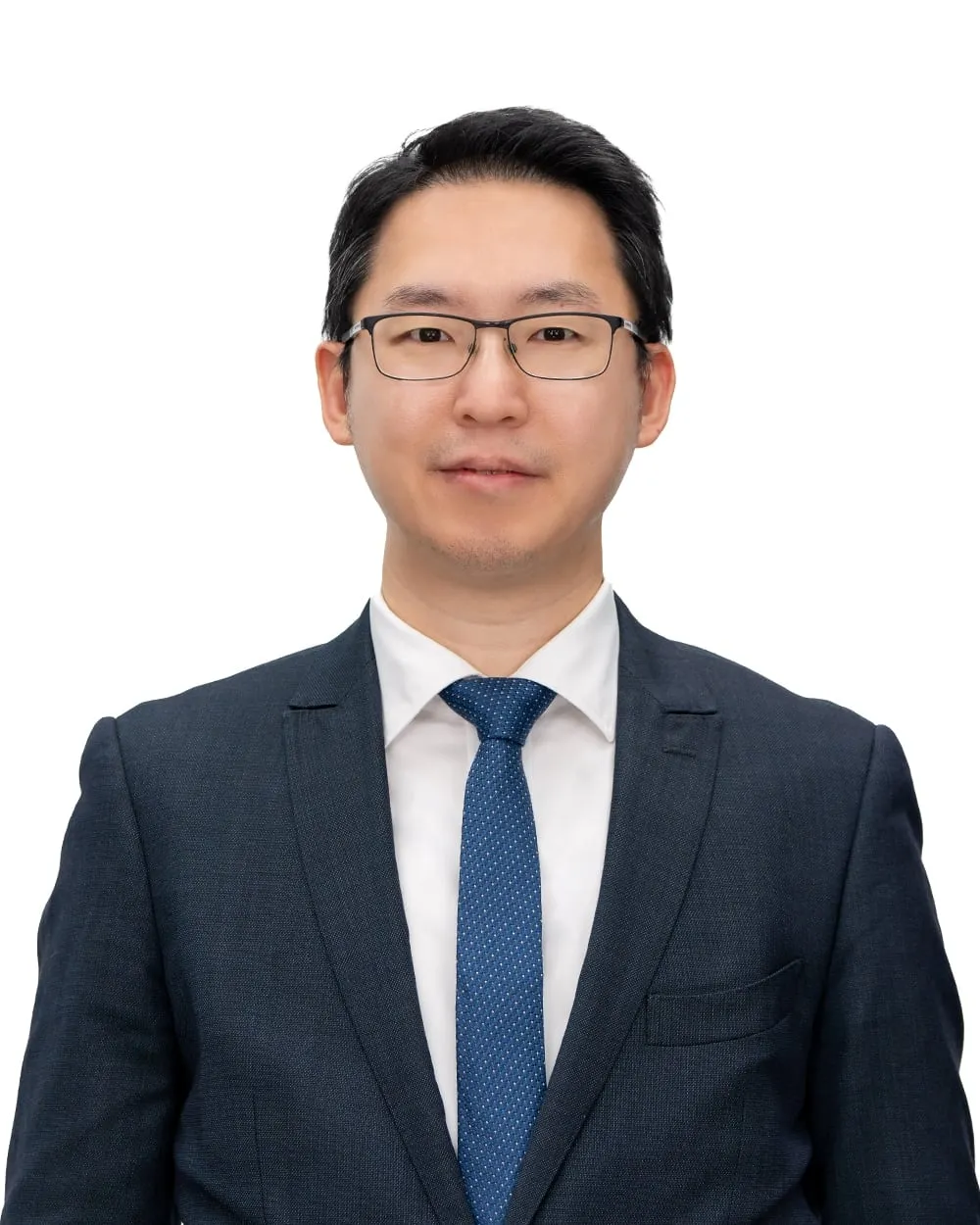
Dr Lai Hiu Ping, Frank賴曉平
Specialist in Ophthalmology
Qualifications
- MBChB (CUHK)
- FHKAM (Ophthalmology)
- FCOphthHK
- FRCOphth
- FRCSEd (Ophth)
- MRCSEd

Dr Chu Chung Yin, Ben朱仲賢
Specialist in Ophthalmology
Qualifications
- MBChB (CUHK)
- MRCSEd
- MPH (HK)
- FRCOphth
- FCOphthHK
- FHKAM (Ophthalmology)
- Honorary Assistant Professor (HKU)

Dr Chu Sui Chun, Victor朱瑞俊
Specialist in Ophthalmology
Qualifications
- MBBS (HK)
- MRCSEd
- FCOphthHK
- FHKAM (Ophthalmology)
- Honorary Clinical Assistant Professor (CUHK)

Dr Noel Wat屈匡祈
Specialist in Ophthalmology
Qualifications
- MBChB (CUHK)
- MRCSEd
- FCOphthHK
- FHKAM (Ophthalmology)

Dr Leung King Sai梁競茜
Specialist in Ophthalmology
Qualifications
- MBChB (CUHK)
- FHKAM (Ophthalmology)
- FCOphthHK
- MRCSEd (Ophth)

Dr Chow Po Chee, Prudence周寶姿
Specialist in Ophthalmology
Qualifications
- MBBS (HK)
- MRCSEd
- FCOphthHK
- FHKAM (Ophthalmology)

Dr Wong Kin Keung王建強
Specialist in Ophthalmology
Qualifications
- MBChB (CUHK)
- FCOphthHK
- FHKAM (Ophthalmology)
About Clarity Eye Centre
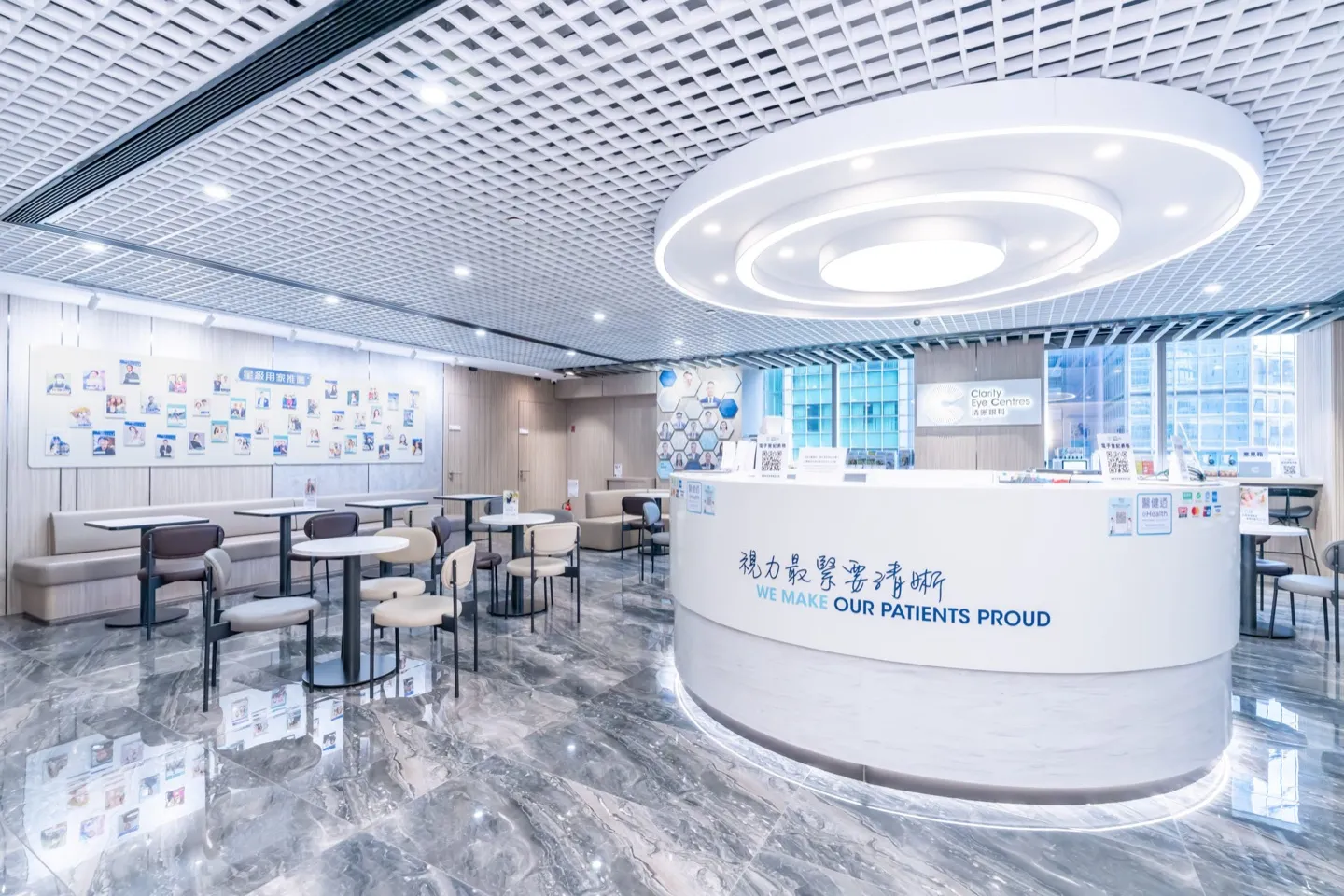
Clarity Eye Centre in six facts
A look at our clinics, facilities and team.
- sq ft of clinic space
- 20,000
- sterile eye operating theatres
- 7
- diagnostic and surgical instruments
- 100+
- Listed on the HKEX Main Board: stock code
- 1406
- people in the medical team: ophthalmologists, optometrists, pharmacists and frontline clinical staff
- 100+
- assessment and laser vision correction, if the doctor confirms you are suitable
- Same day
Patient stories
In your circle, many have had vision correction at Clarity
Near or far, the people around you choose Clarity.
Real customer stories
What patients wrote online, translated from the original Chinese.
After my SMILE Pro surgery my vision is back to normal. The centre is clean and tidy, the staff are careful and conscientious and check on how your recovery is going without being asked, and the doctor was professional. Full marks!
Google · A detailed examination. The doctor explained everything thoroughly, and the checks after the surgery were careful too.
Google · The sooner you do it, the sooner you enjoy it! I ride a motorbike and have to wear a helmet, so glasses weren't very convenient. After SMILE I don't need glasses any more, and I'm so happy!
Google · The team here is professional and attentive. They explained everything very clearly before the surgery, which put me completely at ease. The procedure was quick and almost painless, and I recovered faster than I expected. Now I'm free of glasses and my vision is very clear. Thank you so much to the medical team for looking after me!
Google · After my SMILE Pro surgery I no longer have myopia and I'm back to life as it was before glasses. I'm really excited, and everyday life is much easier. The surgery was worth having, and it has lifted my whole mood. The service here is very good too, with follow-up after the surgery. A very good experience; I'll recommend it to friends.
Google · The surgery was quick and not uncomfortable, the place is clean and the staff were very good 👍🏻 Very satisfied.
Google · I signed up for one of the centre's talks and decided on surgery only after learning about it in detail. Everything went smoothly, and the medical team were very professional and reassuring. The follow-up visits and aftercare were well timed and thorough. A very good vision correction experience, and one I'd recommend.
Google · The nurses and doctors were all very professional and the examination was thorough. The surgery was quick and less nerve-racking than I'd imagined, and my vision has recovered well. Highly recommended!
Facebook · A good experience overall; the optometrist and the surgeon were both very professional.
Google · A detailed examination, and the doctor explains things carefully. If you don't meet the criteria, they will turn down the surgery.
Google · After SMILE Pro, not having to wear glasses is so convenient. The doctors and nurses are all very professional. Highly recommended 👍
Google · Thank you to the doctor and the medical team for explaining things carefully and following up. Everything went smoothly, and for now I'm satisfied with the result of the surgery.
Google ·
Artists, KOLs and athletes in their own words
People who had vision correction at Clarity talk about their own experience in these videos.
沈震軒
康聰
Angel
張柏鴻
駱振偉 Thor
何智豪
黃美棋
羅映潮 Virginia
梁芷珮 Christy
劉沛蘅 Hillary
李靄璣 Rikko
吳天佑
岑珈其
熊仔頭
Mirror Alton & Frankie
Lilam
盤菜瑩子
The process
A dedicated account manager, all the way
From the first enquiry to the follow-ups after surgery, a dedicated account manager looks after you: booking the examination and the surgery date, reminding you how to prepare, and following up on your visits. Whichever procedure you choose, vision correction at Clarity follows roughly these six stages; the surgical steps and timings differ by procedure and are on each procedure page.
Enquiry and booking
Details
Contact our Customer Care team by WhatsApp or phone to ask about the procedures, fees and available appointments. Clinical questions about your own eyes will be passed to an optometrist or a doctor.
Talk or first consultation
Details
Clarity holds regular vision correction talks where an ophthalmologist explains the procedures and their trade-offs, which helps if you are still comparing. If you already have an idea of what you want, you can book the pre-operative examination directly.
Detailed pre-operative examination
Allow several hours
Details
Contact lenses must be left out for a period before the examination so the cornea returns to its natural shape. Otherwise, the measurements may not be reliable. Soft, hard and orthokeratology (Ortho-K) lenses each require different discontinuation periods:
- Soft contact lenses (5 days)
- Hard contact lenses (3–4 weeks)
- Ortho-K lenses (3 months or more)
The examination covers auto-refraction test, eye pressure measurement, refraction test, corneal topography and thickness measurement. For ICL, anterior chamber depth and endothelial cells will also be measured. An ophthalmologist will then explain the results, suitable procedure(s) and the associated risks.
After pupil dilation, your eyes may become sensitive to light and near vision may be blurred for several hours. It is advised not to drive yourself that day.
Preparing for surgery
Details
Once a procedure is agreed, book the surgery date as advised by the team. For ICL, the lens is custom-made to your measurements, so surgery can only be scheduled once the lens is ready.
Please inform the team as early as possible if you have any medication allergies, are taking any regular medications, or are experiencing any eye discomfort. As you will not be able to drive yourself on the day of surgery, please arrange for someone to accompany you.
The day of surgery
Allow several hours
Details
Wear no eye or face make-up and no perfume, cologne or other scented products. Choose loose clothing that buttons at the front, and avoid high necks or anything pulled over the head.
Before surgery an optometrist checks your prescription once more and the doctor reassesses your eyes. Surgery is done under anaesthetic eye drops; keep as still as you can, do not talk, and follow the doctor's instructions. Afterwards you rest at the clinic and go home once the doctor has checked your eyes, usually without a hospital stay.
Follow-up and aftercare
Details
The first follow-up is usually the day after surgery, with further visits on a schedule set for each procedure; the number of follow-ups included in the fee and the period to complete them are in the fees section of each procedure page.
In the first week, use your eye drops on time and avoid rubbing your eyes, eye make-up, and shampoo, soap or hairspray getting into your eyes. Stay away from swimming, saunas and strenuous exercise, from smoking, alcohol and dusty places, and wear sunglasses outdoors. Do not drive until your vision is steady.
If eye pain gets worse, your vision suddenly drops or redness increases, contact the clinic straight away instead of waiting for your next visit.
Before you decide
What should everyone know before vision correction?
The situations below apply to all vision correction procedures. They do not necessarily rule out treatment permanently but indicate that a condition may need to be treated first, a waiting period may be required, or an ophthalmologist may need to assess whether a different approach would be more suitable.
Times to wait
- Pregnancy or breastfeeding: hormonal changes can make the prescription and corneal measurements fluctuate
- A prescription that is still increasing, or eyes that are still developing
- An eye inflammation, infection or injury that has not yet healed
Eye conditions that need a detailed assessment
- Keratoconus or an irregular corneal shape
- Glaucoma, or retinal or macular disease, especially if not under control
- Severe dry eye or another eye-surface problem, which must be treated first
- Previous eye surgery or a serious eye injury
General health and expectations
- Systemic conditions that affect the eyes or wound healing, such as uncontrolled diabetes or autoimmune diseases like rheumatoid arthritis or lupus
- Long-term use of steroids or other medicines that can affect healing
- Expecting a guaranteed zero prescription or never needing glasses again: vision correction can greatly reduce reliance on them, but cannot promise this
Clinics
Two clinics, both beside an MTR station
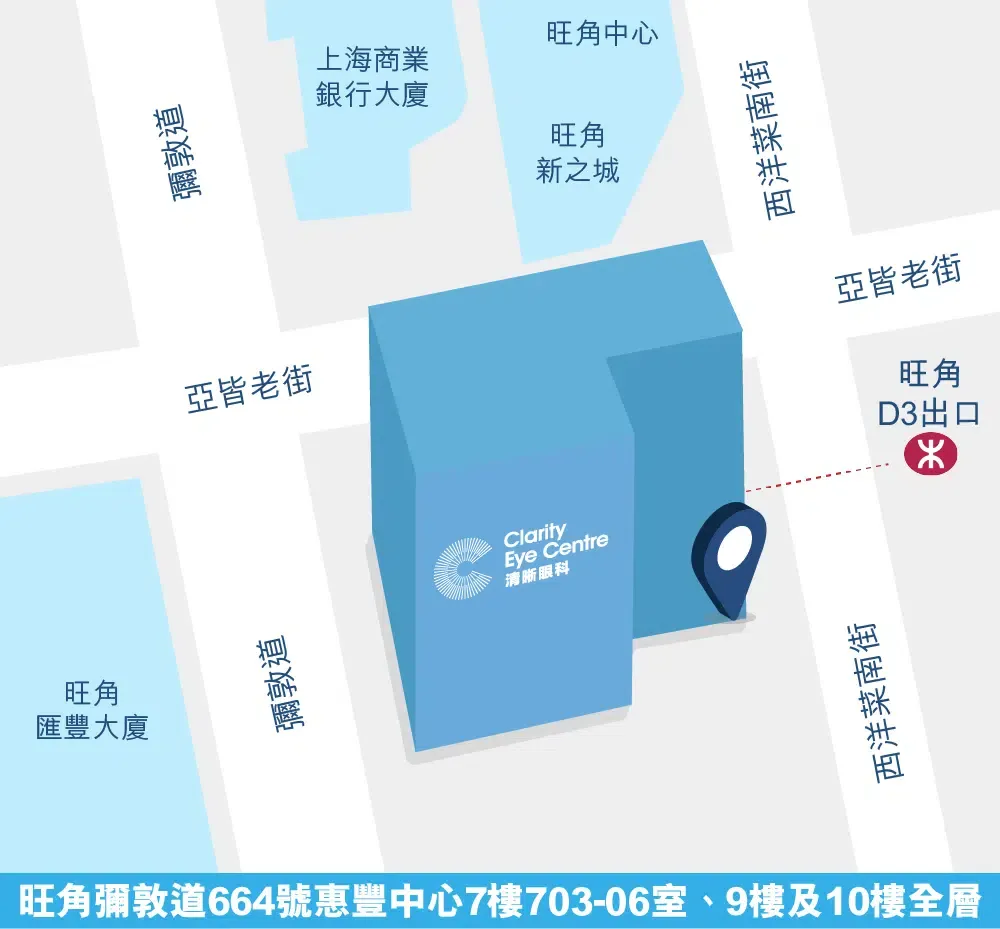
Clarity Eye Centre (Mong Kok)
Rooms 703–706, 7/F, and 9/F & 10/F, Wai Fung Plaza, 664 Nathan Road, Mong Kok
Mong Kok Station, Exit D3
- Monday to Sunday 10:00–18:00
- Sunday Emergency service
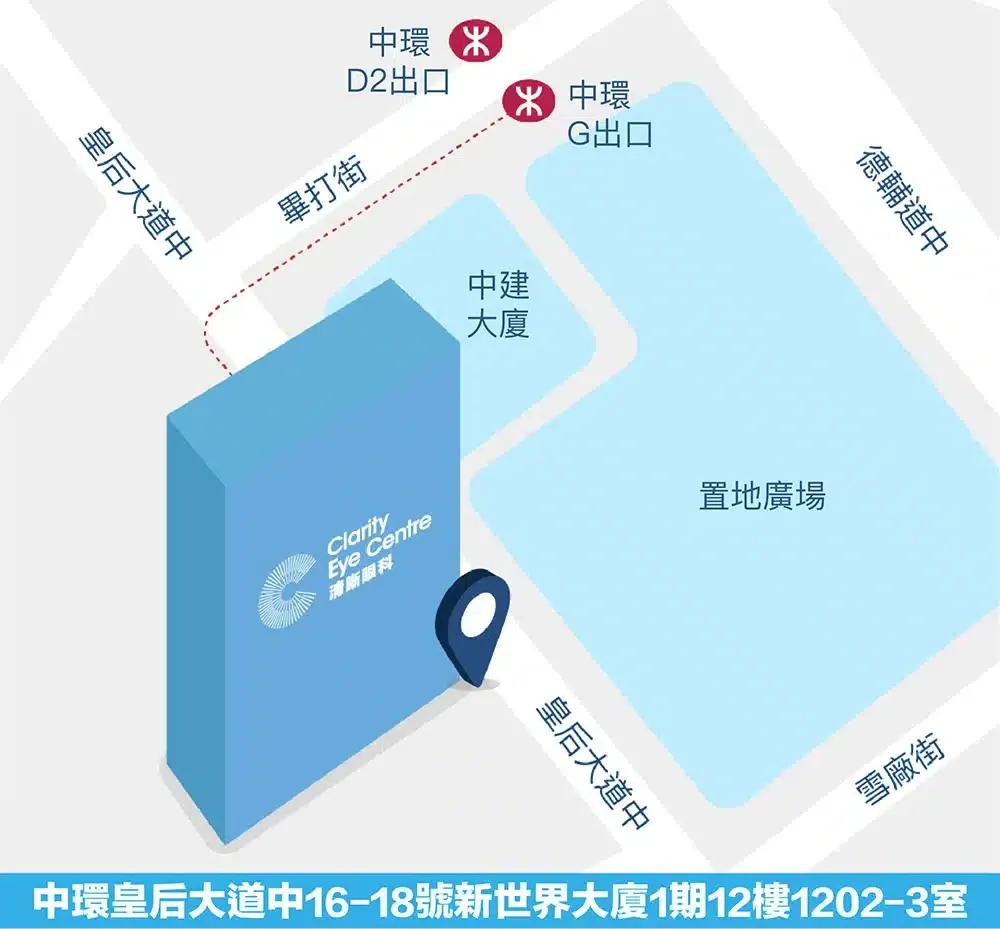
Clarity Eye Centre (Central)
Rooms 1202–03, 12/F, New World Tower 1, 16–18 Queen's Road Central, Central
Central Station, Exit G (or D2)
- Tuesday to Friday 09:00–18:00
FAQ
Vision correction FAQs
Before surgery
How old do I need to be for vision correction? Is there an upper age limit?
You generally need to be an adult whose eyes have finished developing and whose prescription has been stable for a while; the minimum age for each procedure is on its own page. There is no fixed upper limit, but from middle age presbyopia has to be considered too, and in older patients the doctor also checks whether the natural lens has started to cloud and may suggest another option.
How is a basic eyesight check different from a pre-operative examination?
A basic eyesight check mainly measures your myopia, hyperopia and astigmatism so that glasses can be made. A pre-operative examination is far more comprehensive, measuring corneal thickness, corneal topography, and intraocular pressure, alongside a dilated fundus exam. When considering ICL, anterior chamber depth and corneal endothelial cell count are also assessed, after which an ophthalmologist determines the most suitable procedure. The pre-operative examination fee will be deducted from the total surgery fee.
With presbyopia, should I have laser vision correction or presbyopia correction?
Laser surgery for myopia works on the cornea and cannot stop the natural lens from ageing. People who already have presbyopia need an assessment, based on age and the state of the lens, of options such as lens replacement, EVO Viva ICL or laser monovision; the presbyopia correction page compares them.
I'd rather not stop wearing contact lenses yet. What can I do?
Every pre-operative examination needs contact lenses to be left out first (soft lenses generally at least 5 days, rigid lenses at least 4 weeks). If you are not ready for that, you can start with a Mini Check — a first look at the clinic and a conversation in person.
The procedure
Does vision correction hurt?
Surgery is usually done under anaesthetic eye drops, so it is generally painless, although you may feel the eyelids being held open, slight pressure or a brief loss of vision. For a few hours after the drops wear off there may be stinging, watering or a gritty feeling, which mostly settles. Surgery inside the eye feels a little different from laser correction, and the doctor explains this beforehand.
Can both eyes be treated on the same day?
Clarity's vision correction fees are for both eyes, and laser vision correction usually treats both eyes in the same session. ICL and lens replacement for presbyopia are operations inside the eye, so whether both eyes are done on the same day is for the doctor to plan case by case.
Can the pre-operative examination and surgery be on the same day?
For laser vision correction it is sometimes possible to have the examination in the morning and surgery in the afternoon, depending on the results and the day's schedule, provided the doctor confirms you are suitable and you have had enough time to decide. An ICL lens is made from your examination measurements, so the examination and surgery are on different days.
Do I need to stay in hospital?
Usually not. After surgery you rest at the clinic for a while and go home once the doctor has checked your eyes, but you cannot drive yourself that day, so it is best to have someone with you.
After surgery
Will my myopia come back after vision correction?
Two different situations should be distinguished. One is a small degree of regression that may occur while the cornea is healing after surgery. The other is the natural progression of myopia, where the eye's prescription continues to change over time. Confirming that your prescription is stable before treatment helps reduce the likelihood of the latter. If the outcome falls noticeably short of the target, your surgeon will evaluate whether an enhancement procedure is appropriate. The specific enhancement terms for each procedure are detailed in its respective fee section.
When can I wear make-up, exercise or swim after surgery?
During the first week, you should generally avoid eye make-up, swimming, steam baths, and strenuous exercise. Afterwards, you may gradually resume activities as instructed by your doctor; water sports and sports with a risk of impact usually require a longer wait. Recovery timelines vary by procedure—please see the Recovery section on each procedure's respective page.
Will I definitely have zero prescription and never need glasses again?
Not always. Vision correction aims to bring your prescription close to a planned target so that you can manage most of daily life without glasses; a small prescription may remain, and some people still use glasses for night driving or long spells of reading. Once presbyopia arrives in middle age, reading glasses may also be needed for close work.
Vision correction aims to reduce your dependence on glasses and contact lenses in everyday life. It does not make your vision sharper than it is with glasses or contact lenses, nor does it eliminate the eye health risks associated with high myopia.
Will I still get presbyopia after vision correction?
Yes. Presbyopia is the natural lens losing its focusing ability with age, while laser surgery for myopia works on the cornea, so one does not affect the other. If presbyopia develops later, the presbyopia correction options can be assessed then.
If I have high myopia, does vision correction remove its eye-health risks?
No. Highly myopic eyes are usually longer, with a thinner retina, and the risks of retinal detachment, glaucoma and macular disease do not change with vision correction. Even if you no longer need glasses after surgery, you should still have regular dilated fundus examinations.
Can I still have cataract surgery in the future?
Yes. Laser vision correction reshapes the cornea while leaving the natural lens untouched, and an ICL can be removed if cataract surgery is required in the future. Because corneal measurements are used to calculate the power of the intraocular lens for cataract surgery, you should always tell your eye doctor that you have previously undergone vision correction.
Will my eye pressure readings be accurate after laser vision correction?
They may not be. Laser vision correction makes the cornea thinner and changes its shape, so eye pressure measured in the usual way can read lower than it really is. Whenever your eye pressure is checked or glaucoma is monitored, mention that you have had laser vision correction.
Other questions
I only want to find out more. What can I do?
You can WhatsApp or call 6888 8811 and talk to Customer Care without making an appointment; they refer you to an optometrist or a doctor when needed. You can also sign up for a seminar given by a specialist ophthalmologist.
What are the seminars like?
Small-group seminars given by a specialist ophthalmologist; you can bring family or friends and ask questions on the spot. They are held on weekday evenings and at weekends, in Mong Kok or Central.
Can I pay by instalments?
Yes, by credit card instalments; WhatsApp or call 6888 8811 for the number of instalments and details.
Booking and enquiries
Pre-operative examination
A specialist ophthalmologist assesses which procedure suits you; contact lenses are left out beforehand.
Mini Check
No need to stop wearing contact lenses first — a first look at the clinic and a conversation in person.
Seminar
Given by a specialist ophthalmologist to a small group; bring family or friends and ask questions on the spot. Weekday evenings and weekends, Mong Kok or Central.
Customer Care
If you only want to find out more, just talk to us — no appointment needed; we refer you to an optometrist or a doctor when needed.
or call 6888 8811
Notes and sources (3)
- Pick two, side by side
By method the procedures fall into three groups: a lenticule made inside the cornea and removed through a tiny incision (SMILE Pro, SMILE, SILK), a corneal flap lifted so a laser can reshape the cornea beneath (LASIK), and a lens implanted inside the eye (ICL); presbyopia correction is planned separately, according to age and the state of the natural lens. The full table sets the five procedures for myopia and astigmatism side by side: the fee for both eyes, the myopia and astigmatism they treat, the laser time per eye, the follow-ups the fee includes, and whether corneal tissue is removed, whether a flap is made, the incision, the lenticule shape, the laser platform, whether hyperopia can be corrected and whether the result can be reversed. The side-by-side view lists only what differs between the two.
Presbyopia correction is not listed in the table because it treats lens ageing, which is more complex; for a comparison of the presbyopia options, see the presbyopia correction page.
- A dedicated account manager, all the way
Each procedure has its own surgical steps, recovery timeline and activity restrictions. The stages outlined above are general arrangements that apply across procedures. Any instructions given by your doctor during the examination and follow-up visits take precedence.
- Clarity's figures
"No.1 by market share for both SMILE and ICL at listing": Clarity's listing document of January 2022 cites a Frost & Sullivan report, by 2020 procedure revenue among private eye-care providers in Hong Kong: for SMILE, Clarity ranked first with 38.0% and the second provider had 18.4%; for ICL implantation, Clarity ranked first with 46.4% and the second provider had 8.8%. *The maker does not disclose more recent SMILE figures, so the listing document's figures are used. "Among the first in Hong Kong to bring in SMILE in 2014" is from the same document.
"No.1 for ICL three years running": STAAR Surgical data for 2023 to 2025. "The only" and "the first": STAAR Surgical certification. "SILK, only at Clarity": only Clarity has brought the Johnson & Johnson ELITA™ femtosecond system to Hong Kong.
"Since 2006": Clarity's first vision correction procedure (LASIK) was in October 2006 (patient records). "Near or far": in the past year, people from all 18 districts of Hong Kong had vision correction at Clarity (by registered address).
This page is for general information only and does not replace a consultation with an ophthalmologist.